
How To Create A Comfortable Helpers Room In Your Singapore BTO Flat: Essential Guidelines For Safe And Private Accommodation
22 Sept 2026
Rethinking Space and Dignity: Domestic Helper Accommodation in Singapore BTO Flats
Singapore’s urban landscape has evolved into a microcosm of global labor migration, where domestic helpers play an indispensable role in local households. As Build-To-Order (BTO) flats continue to define modern public housing, questions about how to provide safe, dignified accommodation for live-in helpers have become increasingly complex and urgent. Historically, the city’s tight floor plans reflected a culture of maximizing utility, but today, employers are called upon to ensure not only convenience, but fundamental rights. This exposé delves into the realities, regulatory nuances, and evolving design philosophies shaping the daily lives of domestic helpers within Singapore’s BTOs, highlighting both the present and the possibilities for a more equitable future.
The Shifting Landscape of Domestic Helper Accommodation
From Invisible Corners to Dedicated Spaces: For decades, domestic helpers in Singapore often slept in improvised spaces, corridors, utility rooms, or corners of living rooms, especially in older HDB flats with limited floor area. Yet, societal progress and advocacy have pushed norms towards providing a proper, private area. The Ministry of Manpower (MOM) now requires that helpers receive accommodation shielded from hazards, with ventilation, basic furnishings, and the ability to change clothes privately. Despite no universal minimum room size, MOM emphasizes that conditions, rather than mere square footage, are the key determinant.
Rising Standards, But Patchwork Adherence: MOM’s guidelines specifically prohibit sleeping in areas with cameras, exposure to dangerous equipment, or cohabitating with male adults. Compliance, however, is uneven, influenced by household size, flat layout, and prevailing attitudes. In newer BTOs, most four- and five-room units offer a clear path to separate rooms, yet the three-room flat remains a challenge, prompting creative partitioning and furniture solutions.
Market and Policy Context: As Singapore’s BTO income ceiling was recently raised (source), more diverse households, many employing domestic helpers, are entering the market. According to studies, nearly one in five Singaporean homes employs a helper, multiplying the significance of proper accommodation standards.
Patterns, Challenges, and Solutions for BTO Owners
Four-Room vs. Three-Room Dilemmas: Owners of four- and five-room BTOs enjoy flexibility to designate a bedroom for the helper, while three-room owners face tougher constraints. The prevailing tactical shift in smaller flats involves creating screened sleeping zones within shared bedrooms, always ensuring the helper shares only with appropriate female household members. Using opaque partitions instead of transparent screens is now regarded as best practice.
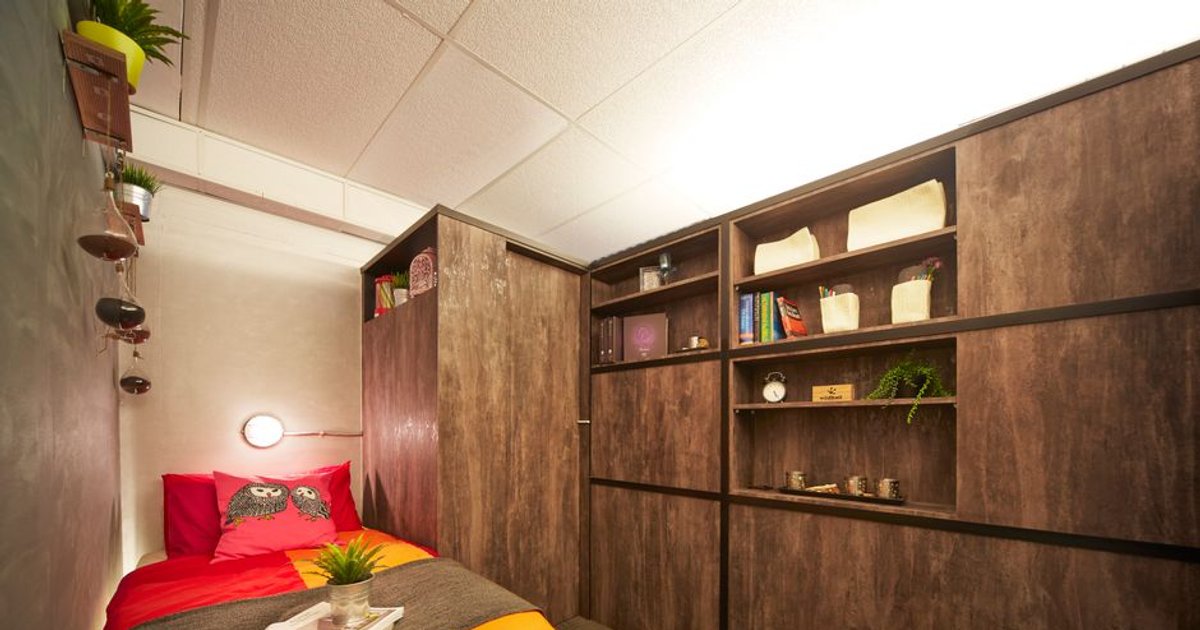
Design Choices Creating Usable Space: Successful layouts rely on vertical storage, wall-mounted shelves, tall wardrobes, and flexible furniture such as single beds with drawers. Compact desks and wall lights can enhance usability without clutter. Employers are also encouraged to design the helper’s space at the renovation stage, rather than relegating her accommodation to leftover corners.
Privacy and Safety Over Convenience: MOM guidelines highlight that privacy is non-negotiable. Surveillance devices cannot be in sleeping, changing, or bathing spaces; helpers must have a lockable drawer or cabinet for their personal items. Electrical points must be installed safely, with no trailing cables or sockets in wet zones.
Ventilation and Comfort: Natural airflow is preferred, but in flats where windows are limited or blocked, an electric fan or air-conditioning unit is mandatory. Ensuring helpers are not exposed to excessive heat, cold, or dampness is central to their wellbeing.
Planning Test for Accommodation: Before a helper moves in, employers must check whether her space enables proper rest, storage, privacy, and safe movement; the bathroom should be easily accessible, and the sleeping area free from household traffic or noise.
More Like This




Comparative Perspectives: Dormitories vs. Private Homes
Room Size Standards, A Myth Corrected: The widely referenced 3.6 and 4.2 sqm minimums, which apply to purpose-built dormitories, do not govern private homes. MOM’s stance is that quality of accommodation matters more than absolute measurements. This correction is crucial, as many employers mistakenly believe their obligation ends with fitting a mattress in a corner.
Policy Principles, Real-World Application: Dormitory operators must meet stringent structural and amenity requirements, while private residences are measured against comfort, safety, and respect. The helper’s declared living address must match Work Permit details, except for rare exceptions, ensuring clarity and accountability.
Live-In Helper Experiences, Diverse Realities: Many helpers report vastly different conditions, ranging from fully furnished rooms to makeshift beds behind curtains in living rooms. Advocacy groups and research, including reports from TWC2, consistently find that privacy and personal space are linked to better mental health, job satisfaction, and retention rates for helpers.
“Singapore’s housing policies are entering a new phase, where the wellbeing of those who support our households must be given equal priority to family comfort. As flats shrink, empathy and thoughtful design must expand.”
Innovative Practices and Forward-Thinking Design Solutions
Integrating Helpers’ Spaces from Day One: Industry experts now advise designing the helper’s space concurrently with kitchen, storage, and family bedrooms. This proactive approach prevents awkward compromises and ensures the helper’s dignity.
Flexible Furniture and Modular Layouts: The adoption of foldable beds, sliding doors, or wall-mounted desks makes small rooms more functional for both helpers and families. For example, in four-room BTOs, a single bed with under-bed storage and a compact wardrobe can create a comfortable, uncluttered helper’s room.
Vertical Storage and Space Planning: Overhead cabinets, tall bookshelves, and wall hooks minimize floor area consumption. This trend enables even smaller three-room units to carve out defined zones that satisfy privacy and storage requirements.
Partitioning and Screening Solutions: Opaque partitions and curtains are increasingly used to delineate helpers’ sleeping areas from shared spaces, providing privacy without requiring structural changes.
Ventilation and Light Management: Modern BTO design pays careful attention to window placement and airflow. Employers supplement natural ventilation with fans or air-conditioning, following MOM mandates.
Smart Home Technologies, With Caution: While smart cameras and home automation are popular, employers must comply with privacy rules, ensuring surveillance covers only common areas and never intrudes on the helper’s quarters.
Advocacy and Education: New initiatives by agencies and NGOs aim to educate employers on best practices, moving beyond compliance to foster respect and trust. Reports like those by ASEAN and BritCham highlight regional and global standards, encouraging Singapore’s ongoing improvement.
Join the conversation
See this article on our social channels.
Real-World Implications: Stories from the Ground
Helper Testimonials: Interviews with domestic helpers reveal that accommodations deeply affect their wellbeing and productivity. “Having my own room lets me rest and feel at home,” shares one helper, contrasting her experience with previous work where she slept behind a curtain in a kitchen. Another notes that access to storage and privacy improves her sense of security.
Employer Experiences: Employers who proactively provide proper accommodation report smoother relationships and higher retention. One BTO owner credits the decision to reserve a separate room for their helper with reducing tensions and improving household harmony. Conversely, cases where helpers are relegated to makeshift corners often result in higher turnover or disputes.
NGO Advocacy and Reporting: Advocacy groups such as TWC2 document the correlation between accommodation quality and helper welfare. Poor living conditions are linked to physical and emotional distress, while compliance with MOM guidelines fosters stability and satisfaction.
Market Trends and Data: The demand for helper-friendly BTO layouts has surged, with renovation firms offering packages that include dedicated helper spaces. Property listings increasingly highlight rooms for live-in helpers as a value proposition.
Case Study, A Four-Room BTO Transformation: One family converted their smallest bedroom into a stylish, compact helper’s suite, featuring a single bed, wall-mounted wardrobe, and desk. This conscious choice not only fulfilled regulatory requirements but also set a higher standard for respect and comfort.
Challenges Remaining: Despite progress, some households continue to treat helper accommodation as an afterthought, citing financial or space constraints. NGOs urge that dignity is not a luxury, but a baseline requirement.
Comparative Analysis: Singapore’s Approach vs. Regional and Global Standards
Singapore’s Condition-Based Model: Unlike some countries that specify minimum room sizes or ratios, Singapore’s MOM focuses on living conditions, ventilation, privacy, safety, storage, and the absence of surveillance. This model is flexible, recognizing that flat sizes vary greatly.
Regional Variations: In Hong Kong and Malaysia, formal requirements are minimal, while Middle Eastern countries often mandate specific room sizes and amenities. Singapore’s emphasis on privacy and protection from male occupants sets it apart.
Global Trends: Reports from ASEAN and international labor groups show a growing movement towards recognizing helpers’ rights as part of broader human rights agendas. Singapore’s approach, while imperfect, is seen as a blueprint for balancing practicality and respect.
Emerging Perspectives, New Homebuyers: Younger Singaporeans, often more exposed to global best practices, are increasingly demanding that helper accommodation reflect values of equality and empathy, rather than bare minimum compliance.
Forward-Looking Insights: The Future of Helper Accommodation in Singapore
Regulatory Developments: Recent MOM alerts signal stricter scrutiny and enforcement, especially as helper populations rise and advocacy intensifies. Proposals for clearer standards and periodic inspection are under discussion.
Market Innovation and Design Evolution: BTO developers and interior designers are responding by integrating helper-friendly layouts, modular partitions, and ergonomic storage. Dedicated helper rooms are featured in new builds, while renovation packages target existing flats.
Social Implications: The growing recognition of helpers as integral members of the household shifts expectations. Proper accommodation is increasingly viewed not just as a legal requirement, but a moral imperative.
Digital Education and Transparency: MOM is ramping up public education, providing guides and checklists to help employers understand and meet their obligations. Online forums and resources, like MastrePlan and UpWill, offer practical advice and showcase model arrangements.
Conclusion: Elevating Standards, From Compliance to Compassion
The question of how to accommodate domestic helpers in Singapore BTOs is no longer simply a regulatory matter. It has become a litmus test of empathy and social responsibility. As Singapore urbanizes and diversifies, the challenge is not just to fit a bed into a corner, but to reimagine what it means to welcome a helper into the household. MOM’s condition-based approach rightly places dignity above measurements, but real progress depends on household action.
The future trajectory points toward designs that prioritize privacy, safety, and comfort from the outset, sustained by education, market innovation, and stricter enforcement. As BTO layouts evolve, the industry will need to balance the demands of space with the values of respect and inclusion. Ultimately, the strategic importance of proper helper accommodation extends beyond regulatory compliance; it shapes the character of Singapore’s homes and society.
Employers are called to set new standards. The story of domestic helper accommodation is about redefining space, and with it, the meaning of home. The stakes are high, and the opportunity for positive change is clear. The path forward lies in thoughtful design, regulatory vigilance, and above all, compassion.